FUE Hair Transplant

FUE Hair Transplant — the Signature 360° Micro FUE™ Protocol.

Signature 360° Micro FUE™ is not a single technique. It is the complete twelve-pillar surgical protocol developed through Dr. Inder's in-depth methodology — now delivered in Bali. From systematic patient preparation, through Cole Instruments precision extraction, through our signature GraftLab BioPreserve™ graft solution, to a structured post-care protocol — every stage of your hair transplant is accounted for, and done the same careful way every time.

  • Founded by an ABHRS Diplomate
  • · Cole Instruments (USA)
  • · Carl Zeiss Loupes (Germany)
  • · 95% Graft Survival
The Philosophy

A great hair transplant is not a procedure. It is a system.

A technique name alone does not determine the outcome. It does not. A hair transplant outcome is the result of dozens of interconnected decisions: how the patient was prepared, what tools were used to extract grafts, what solution the grafts were stored in, at what temperature, for how long, how the recipient channels were designed, who implanted them, with what magnification, at what angle, at what density. A failure at any single stage causes graft loss. A clinic that gets eleven stages right and one stage wrong delivers a mediocre outcome.

Signature 360° Micro FUE™ is the result of Dr. Inder's in-depth methodology — every one of those stages studied, refined, and settled into a complete, repeatable protocol. Twelve pillars. Each one developed, tested, and standardised. Each one trained into every member of the GraftLab Bali team. Each one performed the same way, every time, for every patient. This is what allows us to stand behind our outcomes. Not because we have a magic technique, but because we have a system — and the system has been built around the variables that actually determine your result.

01BEFORE

The procedure begins long before you sit down.
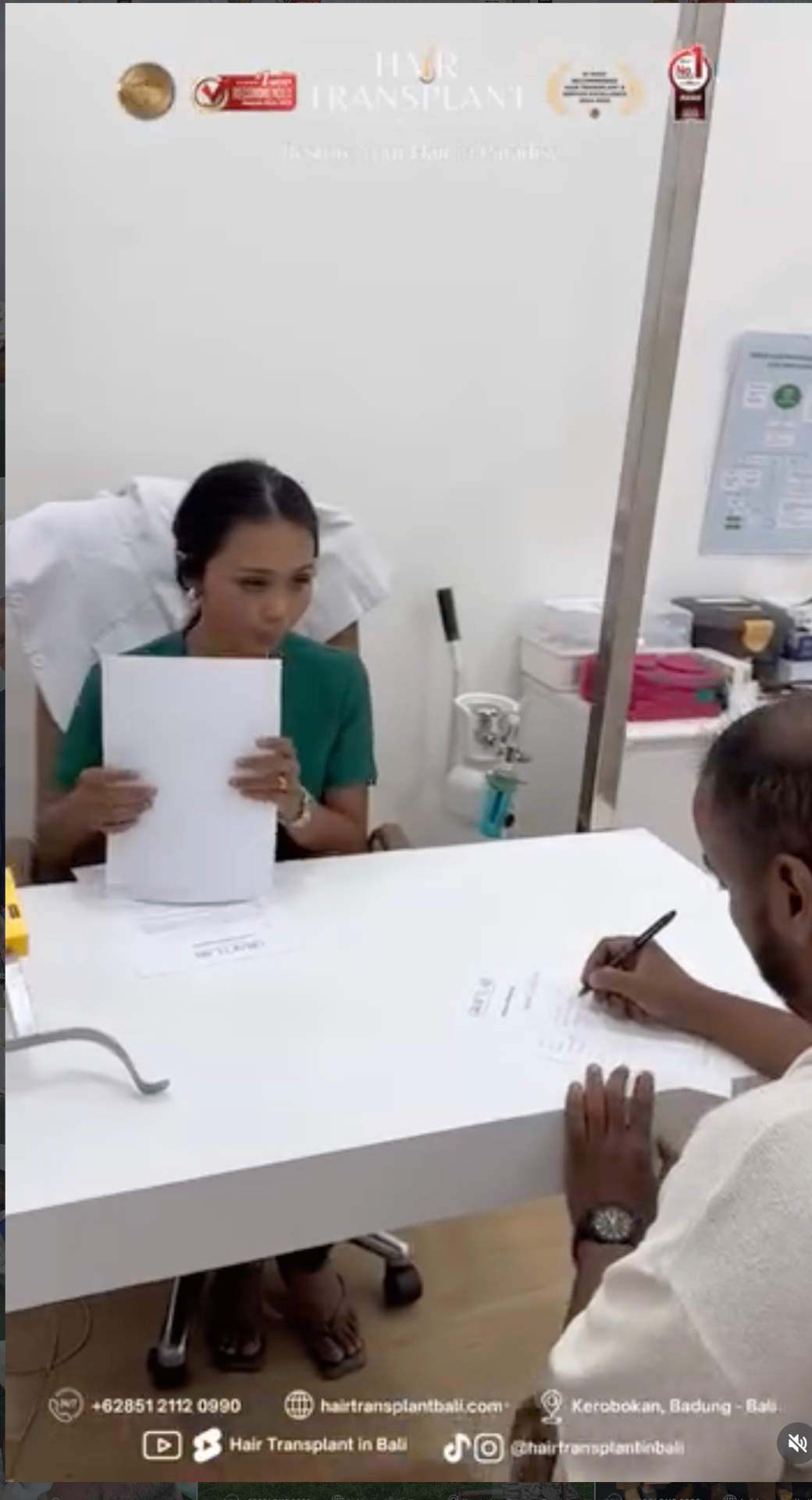
Donor area mapping — Hair Transplant Physician consultation before procedure

Every Signature 360° Micro FUE™ procedure begins with a structured preparation protocol that starts at your consultation and continues until the morning of surgery. Your blood pressure, cardiovascular markers, and current medications are reviewed. Anti-inflammatory medications, blood thinners, and certain supplements that affect graft survival are paused under medical guidance. Your donor area is photographed, mapped, and assessed for hair density and follicle architecture. Your recipient zones are graded against the Norwood or Ludwig scale to confirm the surgical plan. On the morning of surgery, the operating station, instruments, and equipment are prepared to a standardised checklist — the same checklist used in every GraftLab clinic across the region. Nothing is improvised. Nothing is forgotten.

Why this matters

Graft survival begins with the patient, not the Hair Transplant Physician. A patient on anti-inflammatory medication has reduced graft survival. A patient with uncontrolled blood pressure bleeds more during extraction. A patient with poor donor assessment receives an over-ambitious plan. The single largest improvement in outcomes across modern hair transplant came not from technique, but from preparation.
02BEFORE

Optimised scalp. Optimised follicles. Before extraction begins.

Platelet-Rich Plasma (PRP) is best known as a hair loss treatment. At GraftLab, we use it differently — as part of the surgical preparation protocol. Before your procedure, a sample of your blood is drawn and centrifuged to concentrate the platelets — your body's natural source of growth factors. This concentrated plasma is applied to both your donor area and your recipient area. The donor area benefits from improved follicle viability before extraction. The recipient area benefits from improved scalp vascularisation — the blood supply at the implantation site is enhanced, supporting graft survival in the critical first 72 hours after surgery. PRP is commonly used only after the procedure, as a recovery aid. We use it as a preparation tool, because an optimised scalp accepts grafts more reliably than an unoptimised one.

Why this matters

The first 72 hours after implantation are when most graft loss occurs. Grafts need oxygen and nutrients while they integrate into the scalp. A scalp prepared with PRP has measurably better microcirculation at the surgical site — translating directly to higher graft survival.

03EXTRACTION

Your donor area is finite. We treat it that way.

Every patient has a limited number of viable donor follicles for life. Once removed, they cannot be regrown. This is the most important biological resource in any hair transplant — and the one that demands the most careful management. There is a temptation, when a hair transplant is sold by the number, to harvest as many grafts as possible in one session. It produces a dense result today — and an empty donor area for the rest of a patient's life, when progressive hair loss means they may need it most. At GraftLab, we practise donor area conservation. We harvest only what your treatment plan requires today, calibrated by Dr. Inder's protocol and your clinical assessment. The unharvested follicles remain available for future sessions — because hair loss is progressive, and most patients benefit from a second session years later. This is the difference between a plan built for today and one built for the rest of your life.

Why this matters

Hair loss is progressive. A man at an early stage today may be at a much later stage decades on. If his entire donor reserve was harvested in his first procedure, he has nothing left when he needs it. Over-harvesting also leaves visible thin patches in the donor area — irreversible, and obvious with short hairstyles. Conservation is not a marketing position. It is the only responsible practice in long-term hair transplant.

04EXTRACTION

American engineering, used by leading surgeons worldwide.

Cole Instruments extraction during procedure

GraftLab uses Cole Instruments — developed in the United States by Dr. John P. Cole, one of the most respected names in modern hair transplant. Cole's extraction technology is used by leading hair transplant surgeons in the United States, Europe, the Middle East, and across Asia. What makes Cole Instruments different from generic extraction tools is three forms of precision control. Temperature control: friction during extraction generates heat, and heat damages follicles — Cole's system controls the rotational thermal output of the punch, preventing thermal damage to the graft. Rotation control: the punch rotates at precisely calibrated speeds depending on scalp characteristics and follicle architecture — too fast and follicles are transected, too slow and extraction time extends. Depth control: the punch enters the scalp to a precisely controlled depth — deep enough to capture the full follicle, shallow enough to avoid damaging surrounding follicles and tissue.

Why this matters

Follicle transection — severing the follicle during extraction — is the single largest source of failed grafts in any FUE procedure. With Cole Instruments and trained operators, transection rates are kept very low. That difference shows up directly in your final density and graft survival.

05EXTRACTION

Sub-millimetre precision. Cleaner channels. Faster healing.

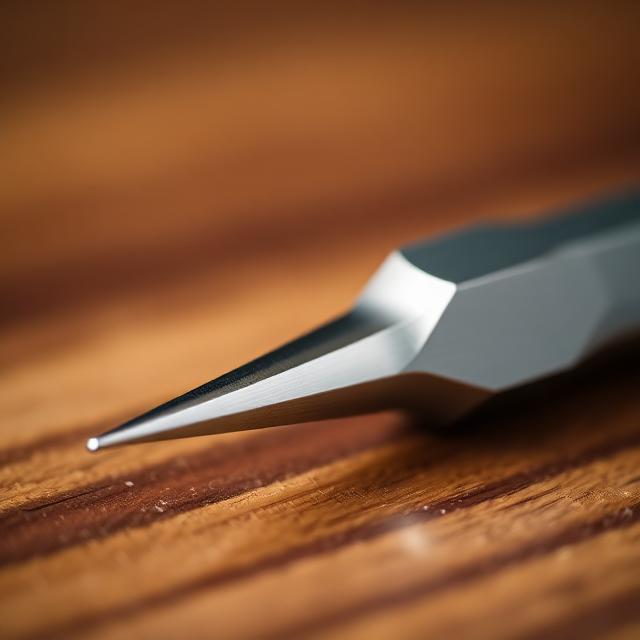
Once grafts are extracted, recipient channels must be created in the scalp to receive them. The instrument used to create these channels — the blade — directly determines healing time, scarring potential, and the eventual density of your result. GraftLab uses sapphire micro-blades sized 1.0 millimetre or smaller, calibrated to the specific graft type and recipient zone. Smaller blades create smaller channels. Smaller channels heal faster, scar less, and allow grafts to be placed more densely without compromising blood supply. Sapphire is preferred over standard steel for one reason: edge precision. A sapphire blade holds its cutting edge far longer than steel, so every channel created during your procedure has the same precise dimensions.

Why this matters

Channel size determines two outcomes: how quickly you return to normal life (smaller channels = less visible recovery), and how dense the final result can be (smaller channels = grafts placed closer together). Every millimetre matters when you are being judged on a hairline.

06EXTRACTION

The same magnification used in microsurgery.

Carl Zeiss surgical loupes

Hair transplant is microsurgery. Each follicular unit being extracted, preserved, and implanted is between 0.5 and 1.5 millimetres in diameter. Working at this scale with the naked eye is the difference between guessing and seeing. Every GraftLab Hair Transplant Physician operates wearing Carl Zeiss surgical loupes. Zeiss is a global standard in surgical optics, used by neurosurgeons, ophthalmic surgeons, and microsurgeons. The magnification, clarity, and depth of field Zeiss loupes provide is the difference between extracting a follicle cleanly and damaging it, between placing a graft at the correct angle and a subtly wrong one, between counting follicles by approximation and counting them precisely.

Why this matters

If a surgical instrument is good enough for microsurgery, it is good enough for your hair. Working with little or no magnification reduces precision at every step. We do not compromise on optics.

07PRESERVATION

What happens between extraction and implantation determines half your result.

Every graft extracted from your scalp must be held outside the body for a period — sometimes for hours — before it is implanted. This holding period is when the most graft loss occurs in hair transplant globally. Grafts dry out. Grafts die. The solution they are held in determines whether they survive. Standard saline — the industry default — allows grafts to deteriorate over the hours of a procedure. At GraftLab, we developed our own. GraftLab BioPreserve™ is our signature graft preservation solution. It does more than keep grafts alive during the holding period — it actively nourishes them, maintaining follicle viability at higher rates than standard saline. The formulation is our own, developed and refined in-house.

Why this matters

A procedure can use perfect extraction and perfect implantation — and still produce a mediocre outcome if the grafts died in saline during the hours between extraction and implantation. The holding solution is one of the most under-discussed determinants of outcome in hair transplant. We developed our own signature solution because we found nothing on the market that matched what our patients deserve.

GraftLab BioPreserve™

Our signature graft preservation solution. Developed in-house. Used in every procedure, in every GraftLab clinic.

08PRESERVATION

Medical-grade chillers. Not ice.

Even the best graft preservation solution requires the correct temperature to function. Too warm, and cellular metabolism depletes follicle resources. Too cold, and cellular damage occurs from crystallisation. The optimal range is precise — and it must be maintained throughout the entire holding period. Ice is sometimes used to hold grafts; it creates an uneven temperature, and as it melts the temperature drifts. Living tissue deserves better control than that. GraftLab uses dedicated medical-grade temperature-controlled chillers. The temperature of your grafts' holding environment is monitored and maintained at the optimal range for the entire duration of your procedure. Every graft, in every minute of holding, experiences the same precise environment.

Why this matters

This is one of the least visible details in a hair transplant — and one of the most decisive. A patient touring a clinic would not notice whether grafts are held in ice or a temperature-controlled chiller. But the outcome difference is significant. We use the chillers because every degree matters.

09IMPLANTATION

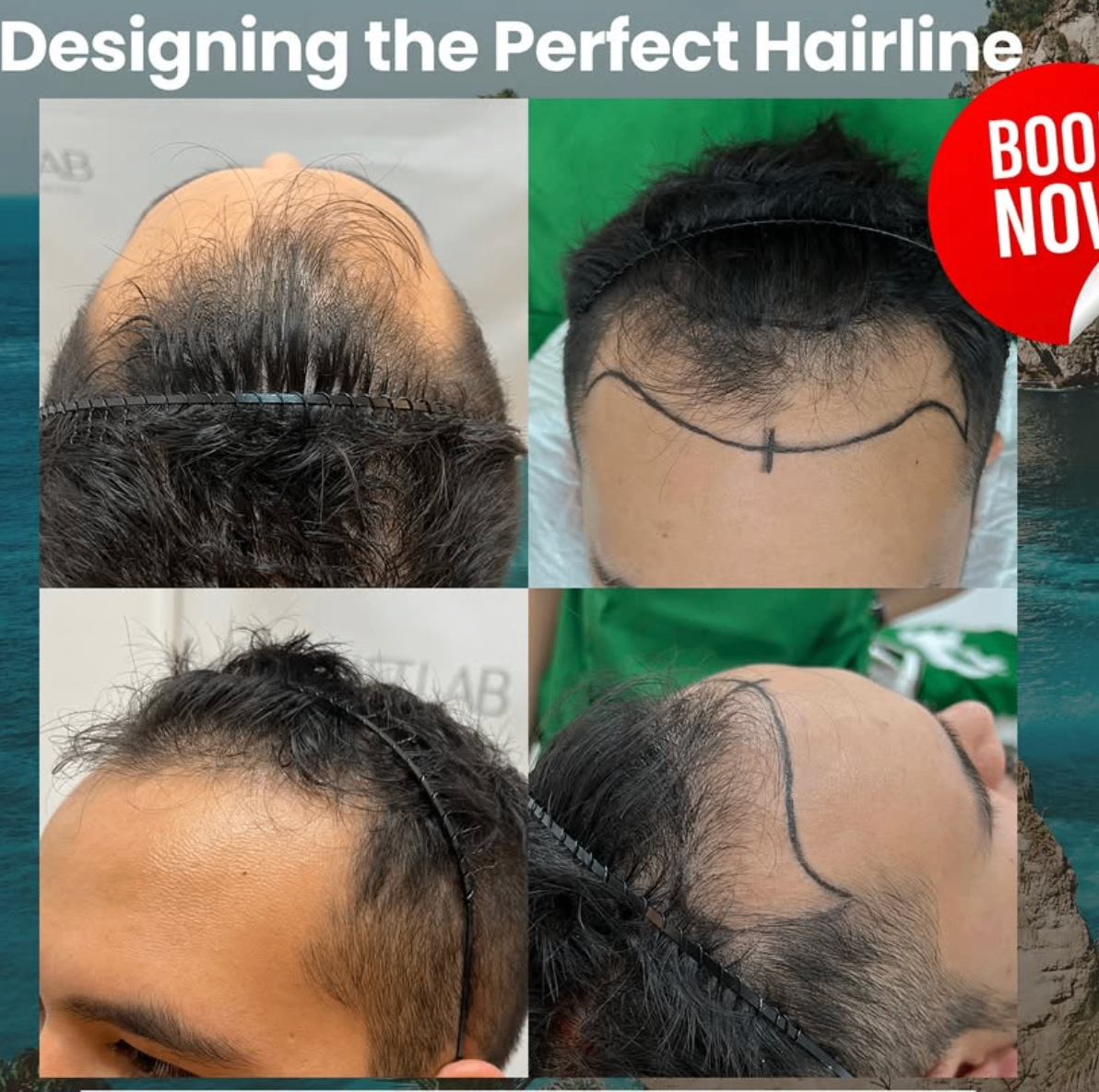
The hairline is a face. Faces are not automated.

Hair Transplant Physician designing and marking the hairline

Semi-automated implantation tools have become common in the industry — devices that punch grafts into the scalp at preset angles and densities. We work by hand instead, for one reason: the hairline is the most artistic part of any hair transplant, and art cannot be automated. Your hairline is a defining feature of your face. Its shape, its angle, its density gradient from front to back, its irregularity, the direction each follicle grows — every one of these details is what makes a hair transplant look natural rather than transplanted. At GraftLab, the Hair Transplant Physician designs your hairline and creates the recipient sites by hand — setting the angle, direction, depth and spacing of every graft, and the irregularity that mimics natural hair patterns. Each graft is then placed into those sites by hand, by a trained team working under the Hair Transplant Physician's supervision — artisan placement, never automated. This takes longer. It requires more skill.

Why this matters

The single most common complaint among hair transplant patients globally is an unnatural-looking hairline — almost always from uniformly angled, uniformly spaced grafts. Natural hairlines have irregularity, angle variation, and a density gradient. Only a Hair Transplant Physician with artistic judgement can replicate this. Your hairline will be on your face for the rest of your life. We design it like it matters.

10IMPLANTATION

Density is not a single number. It is a strategy.

A fixed density quote — 50 grafts per square centimetre, 60, 70. This does not reflect how hair actually grows; hair transplant is not a uniform application. At GraftLab, density is calibrated zone by zone. The frontal hairline, the most visible zone, receives the highest density for immediate visual fullness. The frontal forelock just behind it receives high density without overcommitting follicles. The mid-scalp is calibrated to transition naturally between front and crown. The crown — the most demanding zone — is approached conservatively, often staged across sessions rather than packed in one. Donor harvesting zones are calibrated for even, undetectable harvesting that leaves the donor area looking natural, even with short hairstyles. Every patient receives a custom density map as part of their treatment plan. We do not sell a single “package” density.

Why this matters

Aggressive density packing is associated with lower graft survival, because grafts compete for blood supply. We aim for the upper range of safe density, where blood supply remains optimal — better long-term survival, better visual outcome, better donor preservation.

11EXPERIENCE

Awake. Comfortable. Conversational.

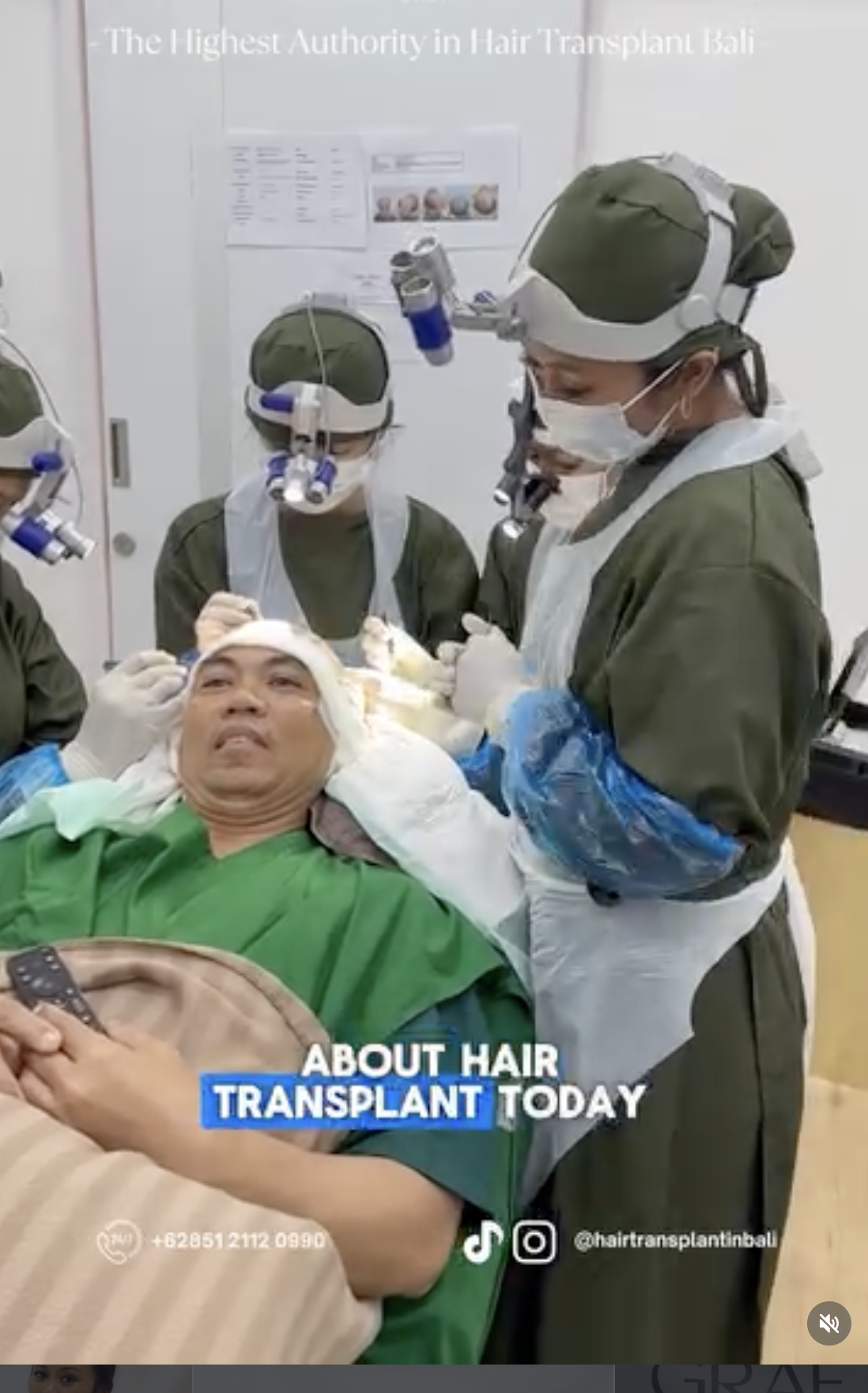
Patient seated, awake during procedure at our Bali clinic

A hair transplant typically takes between six and ten hours, depending on graft count. How you spend those hours matters. At GraftLab, every procedure is performed in an ergonomic seated position. You are awake, comfortable, and conversational throughout. Local anaesthesia numbs the surgical zones — there is no general anaesthesia, no sedation, no loss of consciousness. Halfway through, you take a comfort break for lunch. You can use your phone, talk to your Hair Transplant Physician or your companion, and pause at any time. We designed the procedure around the patient's comfort because the day matters — and a calmer patient is an easier patient to work on carefully. There is also a clinical benefit: an awake, conversational patient can communicate with the team throughout. The procedure becomes a collaboration, not something done to you.

Why this matters

Comfortable patients have measurably lower stress responses, more stable blood pressure, and better short-term recovery. The work is also more accurate when the patient is engaged rather than sedated. Comfort is clinical.

12AFTER

Your procedure ends. Our work does not.

What happens in the thirty days after your procedure determines as much of your final outcome as the procedure itself. Grafts must integrate, inflammation must subside, the recipient zone must heal, the donor area must close cleanly — each of these can go right or wrong. GraftLab's post-care protocol is structured, scheduled, and clinically led. We do not treat post-care as an afterthought or an upsell. It is the twelfth pillar of our protocol because the outcome you experience six months from now depends on the care delivered in the first thirty days.

Why this matters

Aftercare is often left to a take-home pamphlet, with the patient managing recovery alone. Yet the first thirty days decide a great deal of the final result. A structured, supervised post-care protocol is one of the simplest things a clinic can do well — and we treat it as part of the procedure.

  1. DAY 0

    Specialised protective bandage. Detailed aftercare briefing. Full medication package. Recovery instructions for the next 7 days.

  2. DAY 1

    Return to clinic for professional hair wash. Wound check. Photo documentation. Medication review.

  3. DAYS 2–30

    24/7 WhatsApp access to the clinical team in Bali. Daily check-ins for the first critical week. Direct line to your Hair Transplant Physician for complex questions.

  4. MONTH 1

    Mandatory in-clinic review. Second PRP session (included). Progress photography and clinical assessment.

  5. MONTHS 2–12

    Optional enrolment in the GraftLab Graft Care Programme™ — a structured maintenance protocol combining PRP, exosomes, and clinical monitoring. Not all patients need this; those who do, benefit.

By the Numbers

95%

Graft survival rate, measured at 12 months under the Signature 360° Micro FUE™ protocol.

12

Engineered protocol pillars, from patient preparation through long-term aftercare.

3

Countries — Manila, Jakarta, Kuala Lumpur. Same protocol, same standard, same Dr. Inder training.

How We Compare

Not all FUE is equal.

Standard FUE is performed in clinics worldwide. Signature 360° Micro FUE™ is the protocol we developed to close the gaps that standard FUE leaves open.

  • Patient Preparation

    Standard FUE

    Often minimal pre-procedure assessment.

    Signature 360° Micro FUE™

    Systematic 12-point preparation protocol.

  • Pre-Procedure PRP

    Standard FUE

    Rare or absent.

    Signature 360° Micro FUE™

    Standard for every patient, donor and recipient zones.

  • Donor Harvesting

    Standard FUE

    Harvested for one session's density.

    Signature 360° Micro FUE™

    Carefully mapped and evenly distributed across the donor area, so recovery is even and the donor is preserved for the future.

  • Extraction Tools

    Standard FUE

    Generic punches, variable control.

    Signature 360° Micro FUE™

    Cole Instruments (USA) — temperature, rotation, depth controlled.

  • Magnification

    Standard FUE

    Naked eye, or standard low-magnification loupes.

    Signature 360° Micro FUE™

    Precise, high-magnification surgical loupes — Carl Zeiss (Germany).

  • Graft Preservation

    Standard FUE

    Saline solution.

    Signature 360° Micro FUE™

    GraftLab BioPreserve™ — our signature graft preservation solution.

  • Storage Temperature

    Standard FUE

    Often ice-based, non-uniform.

    Signature 360° Micro FUE™

    Medical-grade temperature-controlled chillers.

  • Implantation

    Standard FUE

    Often semi-automated.

    Signature 360° Micro FUE™

    Hair Transplant Physician designs the hairline and creates the recipient sites — angle, direction and density. Artisan hand-placement by a trained team, supervised throughout.

  • Density Strategy

    Standard FUE

    Often a single fixed density.

    Signature 360° Micro FUE™

    Zone-based density mapping, calibrated per patient.

  • Patient Position

    Standard FUE

    Often face-down for extraction.

    Signature 360° Micro FUE™

    Ergonomic sitting position throughout; patient awake.

  • Post-Procedure Care

    Standard FUE

    Take-home pamphlet, minimal follow-up.

    Signature 360° Micro FUE™

    Structured 30-day protocol, 24/7 WhatsApp, month-1 PRP.

Signature 360° Micro FUE™ and GraftLab BioPreserve™ are signature methodologies and formulations developed by Dr. Inder and the GraftLab clinical team. They are delivered at GraftLab clinics in Malaysia, Indonesia, and the Philippines. Each clinic follows the identical protocol, trained directly by Dr. Inder and her senior surgical team. The standard of care you receive at our Bali clinic is the same standard delivered at GraftLab Kuala Lumpur, Jakarta, and Manila. Only the location changes.

Questions About the Method

What patients ask before they choose us.

Now you understand the method. Find out what it means for your hair.

The 60-second graft estimate gives you a first picture based on your hair loss stage — and an indication of how the Signature 360° Micro FUE™ protocol would be calibrated for your case.