Hair Transplant for Men

Your hairline, restored the way it grew.

Whether it is a receding hairline, a thinning crown, or loss across the top, the work is the same: careful, physician-led transplant designed to look like your own hair — because it is. Performed in Bali, to the international standard for hair transplant.

60 seconds · An estimate based on your hair loss stage · Not a medical diagnosis.

Hair Transplant Physician designing a hairline in the Bali clinic

Understanding Male Hair Loss

Most male hair loss follows a pattern.

Male pattern hair loss tends to progress in recognisable stages, mapped by what is known as the Norwood scale — from a little recession at the temples, through a thinning crown, to more extensive loss across the top. We treat every stage. But the right plan is not the same for everyone: it depends on how far the loss has progressed and, just as importantly, on how much healthy hair your donor area can sustainably give. Earlier stages often need less than people expect. More advanced cases call for careful planning, sometimes staged over more than one session, to use your donor supply wisely — today and in the years to come. Wherever you are on the scale, the honest first step is an assessment of what your case actually needs.

Norwood Scale · Stages 1 – 7

1
2
3
4
5
6
7

For Men

The areas we restore.

Full Head Hair Transplant

Male Pattern Baldness

  • Suitable when loss has spread across the front, top, and crown.
  • Coverage planned around your donor supply, not a graft-number target.
  • Often staged across more than one session to protect long-term density.
  • Honest assessment first — sometimes fewer grafts than expected is the right answer.
M-Shape

Receding Hairline & Temples

  • Rebuilt by hand, follicle by follicle, with the soft irregular front of a real hairline.
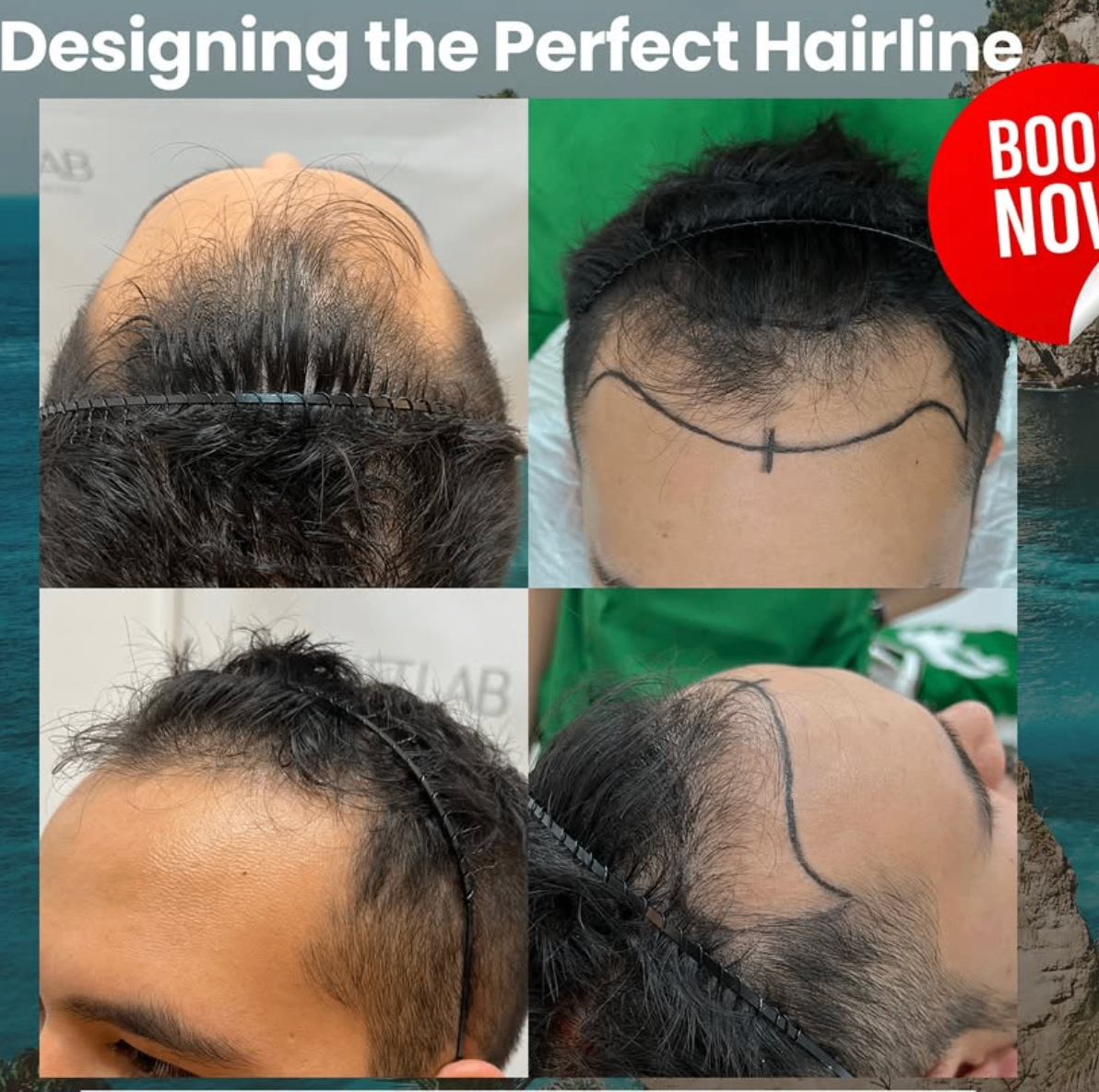
  • Hairline shape, angle and density designed to your face — never a flat line or template.
  • Temple peaks restored to their natural curve where appropriate.
  • Designed so the front edge looks like hair that simply never left.

Spiral pattern

Crown / Vertex

  • The crown grows in a spiral whorl — the transplant must follow it.
  • Grafts placed along the natural direction of the spiral, not against it.
  • Density built up gradually so the crown thickens without flattening.
  • Often combined with top or hairline work in a single planned session.

Facial transplant

Beard, Moustache & Sideburns

  • Patchy beards, thin moustaches and missing sideburns restored with single-hair grafts.
  • Grafts placed at facial-hair angles, which differ from scalp angles.
  • Designed so the result grooms, trims and grows like the rest of your beard.
  • Suitable for filling gaps, building density, or shaping a beard line.

Strip scars, burns, trauma

Scar Revision

  • Old strip-method (FUT) scars softened by transplanting fine grafts into the scar line.
  • Burn scars and trauma scars camouflaged where the scar tissue can hold a graft.
  • Goal is to soften the line so it stops drawing the eye — not to make the scar disappear.
  • Assessment first to confirm the scar is suitable for grafting.

The Procedure

FUE, explained plainly.

We use FUE — follicular unit extraction. Healthy follicles are taken, one at a time, from the permanent zone at the back and sides of your head, and placed into the thinning areas. Because they come from your own permanent hair, they keep growing for life. The procedure is done under local anaesthesia. You are awake and comfortable throughout. Depending on your case, it can be done fully shaven or partly shaven — with the donor area trimmed discreetly so it is not obvious afterwards. Most men are comfortable wearing a cap the very next day. It is, in the end, a precise and patient process — built one graft at a time. That is exactly why how it is done, and who does it, matters so much.

See our full method — the Signature 360° Micro FUE™ protocol →

Step by Step

What happens, step by step.

  1. 01

    Consultation & Plan

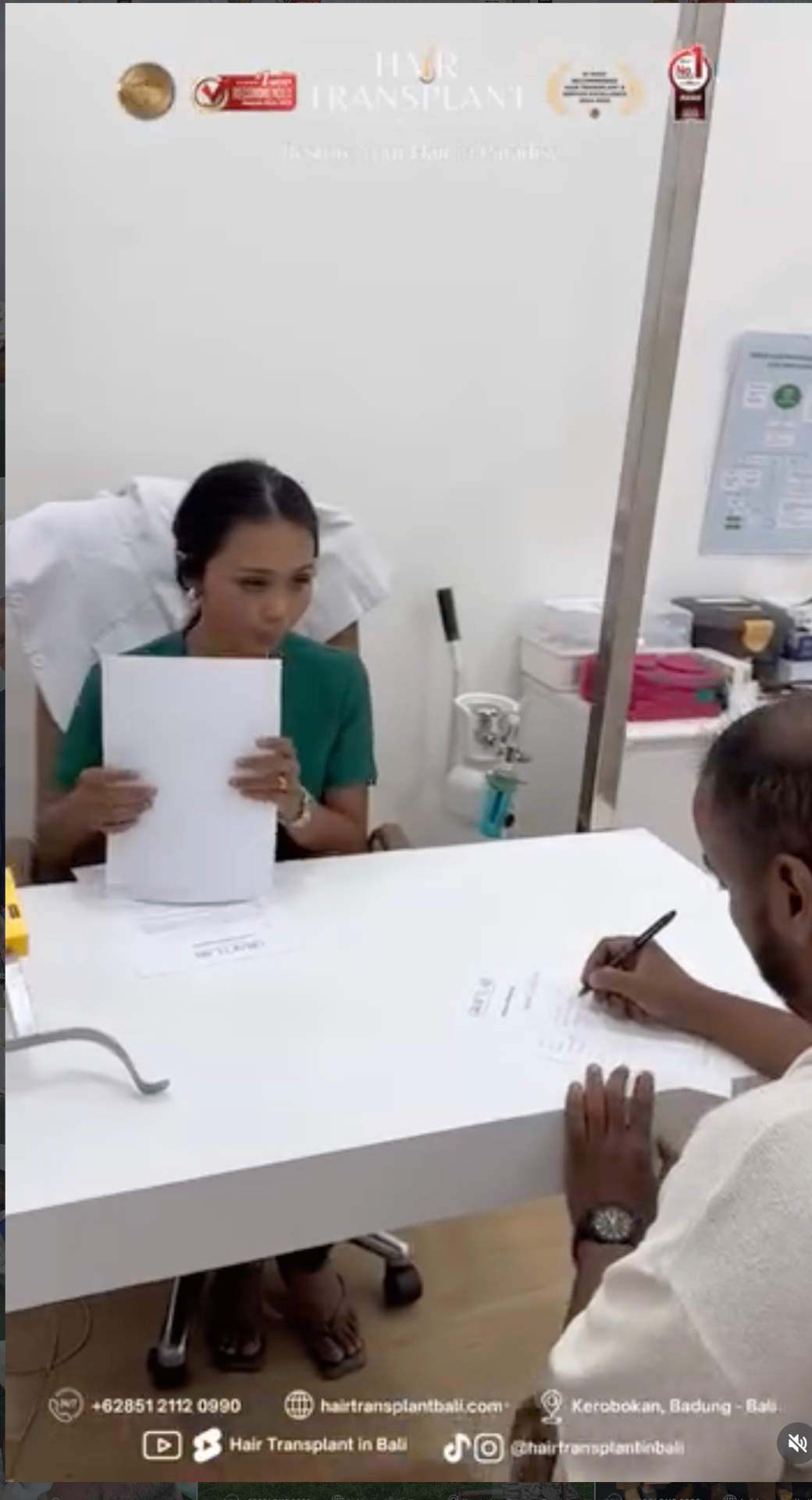
    The Hair Transplant Physician examines your hair loss, checks the health of your scalp, and assesses your donor supply. Your hairline is designed to suit your face, and a sensible graft number is set for your case. You will understand the plan, the timeline, and the cost before anything begins.

    Consultation and surgical planning in the Bali clinic
  2. 02

    Preparation

    The area is shaved or trimmed as your plan requires, and the donor area is prepared. Local anaesthesia is administered so both the donor and recipient areas are fully numb and you are comfortable throughout.

    Preparation

  3. 03

    Extraction

    The Hair Transplant Physician extracts individual follicles from the donor area using a micro-punch chosen to suit your hair, minimising trauma to each graft and the surrounding skin. The trained team receives the grafts and holds them in a protective solution to keep them alive.

    Follicle extraction at GraftLab Bali
  4. 04

    Recipient Sites

    The Hair Transplant Physician creates the tiny incisions that will hold each graft — setting the angle, direction and spacing that determine how natural the result looks. This is the Hair Transplant Physician's work, and where the artistry of a hairline lives.

    Hairline design and recipient site creation
  5. 05

    Placement

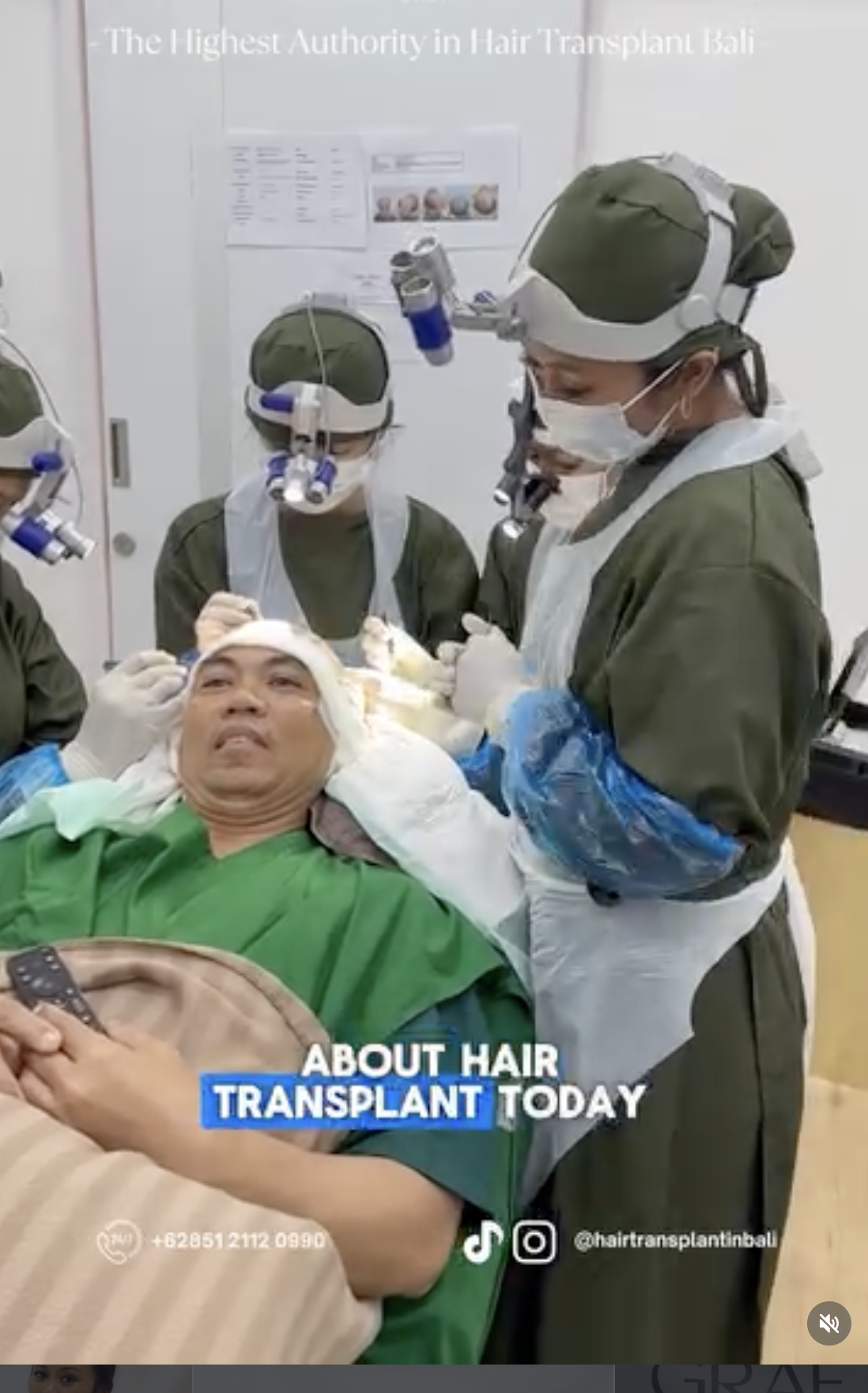
    Each graft is placed into its site at the correct angle and depth, following the Hair Transplant Physician's design, to build even, natural-looking coverage. This is the patient, hours-long work the trained team performs under the Hair Transplant Physician's supervision.

    GraftLab Bali team placing grafts
  6. 06

    Post-Procedure Care

    Your scalp is dressed, and you are shown how to wash and care for it, given any medication you need, and briefed on what to expect. The team handles your aftercare, with the clinic available to you throughout recovery.

    Post-Procedure Care

  7. 07

    Recovery & Regrowth

    Initial recovery takes about a week. The transplanted hair sheds within the first weeks — this is normal and expected. New growth begins around three to four months, with the fuller result visible by about twelve months.

    Recovery & Regrowth

On Looking Natural

No one should be able to tell.

The fear most men have is not the surgery. It is ending up with an obvious result — a flat, evenly-spaced hairline that announces itself. That comes down to design. A natural hairline is irregular, soft and fine at the very front, denser behind, with hairs set at the angles they actually grow. The Hair Transplant Physician designs that front and creates each site by hand; the trained team places the grafts, follicle by follicle, under the Hair Transplant Physician's supervision. Done properly, no one will know. They will only notice you look like yourself.

Results

Men we've treated.

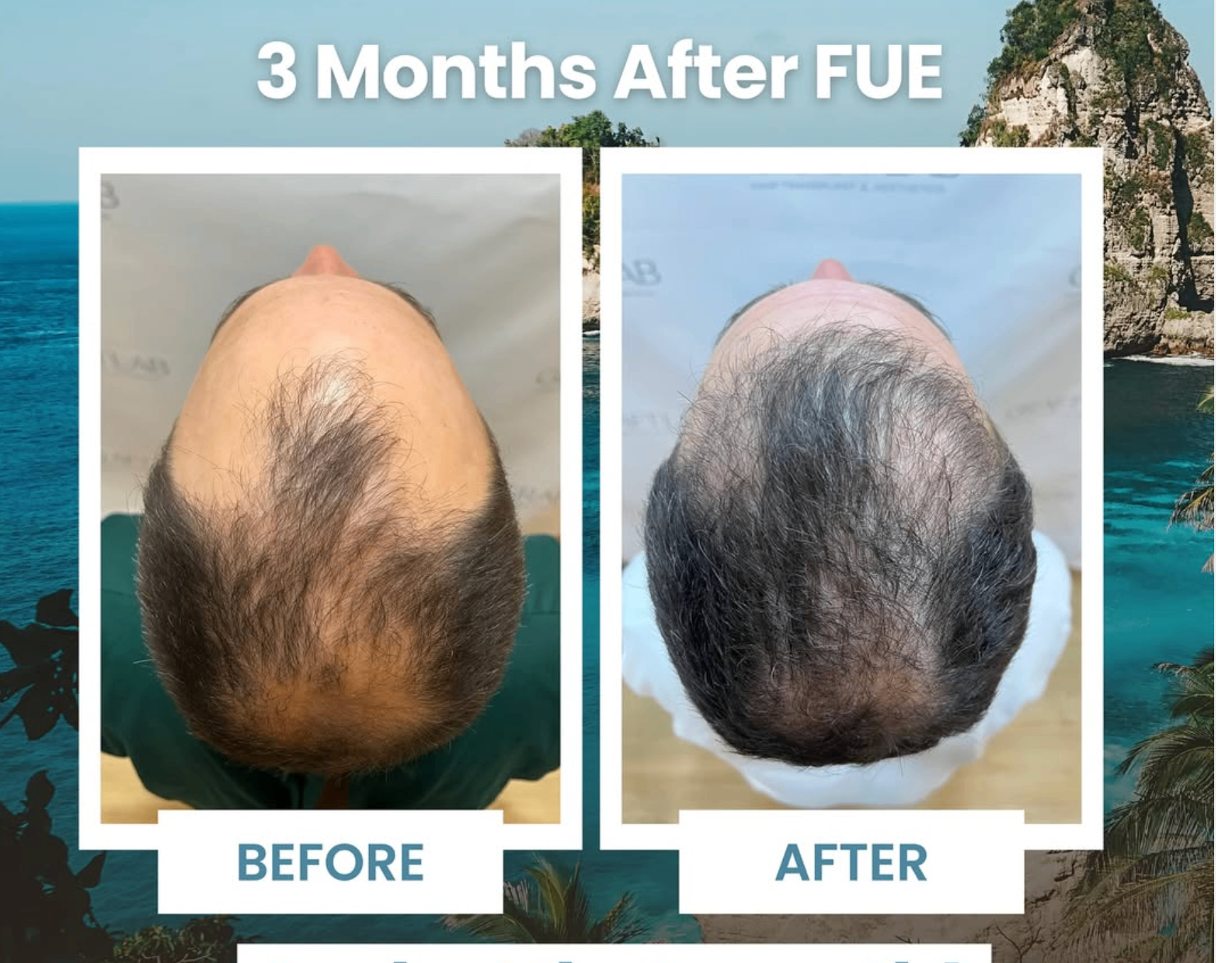
Hairline & top transplant · 3 months
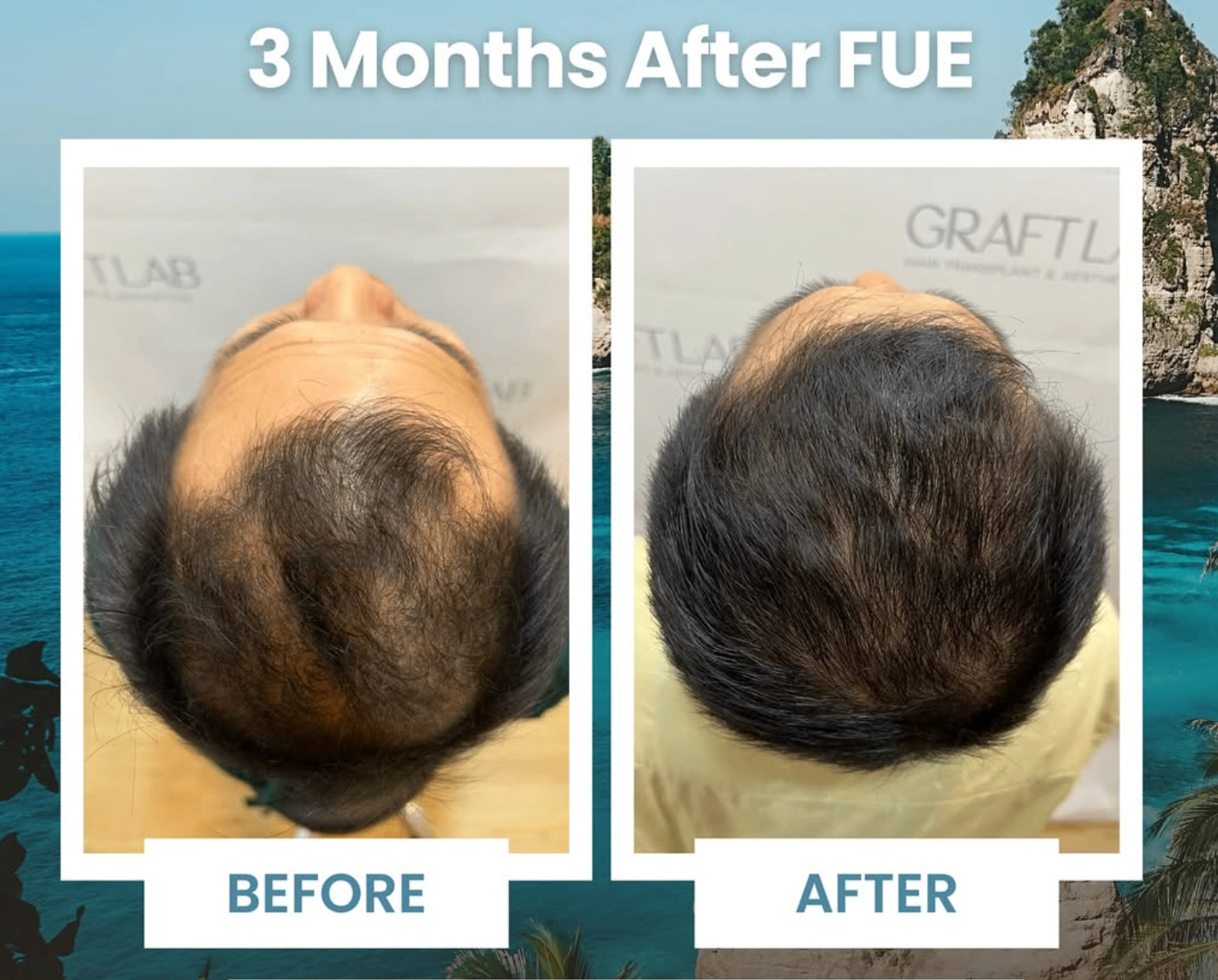
Crown transplant · 3 months
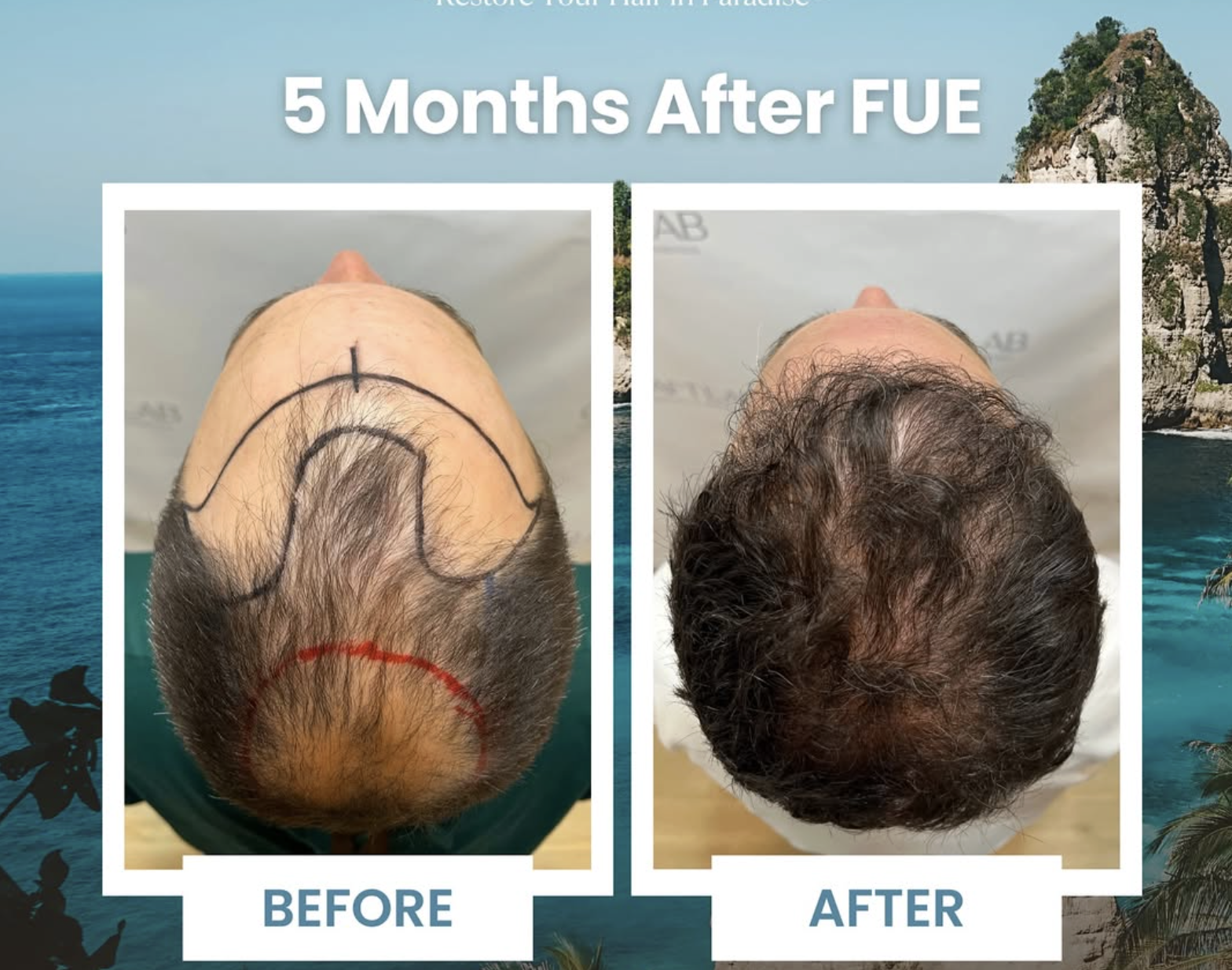
Full top transplant · 5 months

Recovery

What recovery actually looks like.

You can leave the clinic the same day. For the first few days there may be mild swelling and some scabbing around the grafts; this usually settles within a week to ten days. Most men return to normal routine within a week, avoiding strenuous activity and swimming for the first couple of weeks. One thing worth knowing in advance: the transplanted hair sheds within the first few weeks. This is normal — the follicle stays, and new growth begins around three to four months. The fuller result comes in by about twelve months. We guide you through every stage.

Come and See

Start by understanding your own case.

The honest first step is to find out what your hair actually needs. Take the 60-second graft estimate, or message us for a personalised assessment — no obligation, no pressure. Our clinic is in Kerobokan Bali.